
You're invited to our
GRI Reporting Workshop
3-Days Hands-on Practice
Join our expert-led GRI workshop for ESG consultants and sustainability professionals to master the practical application of GRI Standards and position yourself as a skilled sustainability reporting professional. Strengthen your capability to deliver high-quality, globally aligned sustainability reports.
Sessions are in English
Certificate of Completion after Final Exam
Clarify doubts with industry leading experts

What is GRI?
Understanding GRI
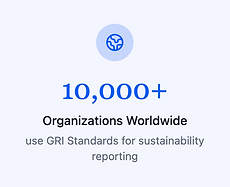
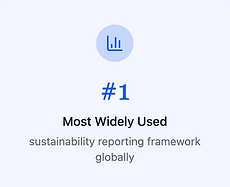
The Global Reporting Initiative (GRI) is the world's most widely used standards for sustainability reporting. GRI provides a comprehensive framework that helps organizations communicate their environmental, social, and governance (ESG) impacts transparently and consistently.
Founded in 1997, GRI has become the global benchmark for sustainability disclosure. The GRI Standards enable organizations of any size, sector, or location to report on their impacts on the economy, environment, and society in a comparable and credible way.
Learning GRI is essential for sustainability professionals, ESG analysts, corporate reporting teams, and anyone involved in organizational transparency and stakeholder communication.


Sale Ends In
DD
Days
:
HH
Hours
:
MM
Minutes
:
SS
Seconds
Workshop Fee
₹6,999
Discount available for early bird participants, alumni and through referrals.
Batch Size
50 Participants only
Get proper guidance with small batches, we focus on quality over quantity.
Our Expert

Pratiksha More
Founder, Sustainability101 · ESG & sustainability reporting practitioner
Pratiksha is an ESG and climate professional with 6+ years across GHG accounting, decarbonisation, climate risk and ESG performance previously an ESG Analyst at Deloitte's Sustainability & Climate Change practice.
She has led end-to-end EcoVadis implementations for logistics and pharmaceutical clients (policies, procurement frameworks, supplier codes, GHG inventories and audit-ready evidence, taking a first-time client past a 55+ score), authored BRSR disclosures for BSE-listed companies, run a DJSI gap assessment for Adani Wilmar across 1,000+ data points, and is currently leading the 2025–26 Sustainability Report for Qatar Central Bank.
Why should you join?
This is NOT Another Theory Workshop
You will actually write GRI disclosures
You will work on real examples
You will learn how to convert data into reporting language
You will understand how companies apply GRI in real life
01
GRI was founded in 1997 in Boston, making it the pioneer of sustainability reporting standards.
02
The European Union's Corporate Sustainability Reporting Directive (CSRD) is built to be interoperable with GRI Standards.
03
GRI Standards are developed through a multi-stakeholder process involving businesses, investors, labor, and civil society.
04
GRI covers Environmental, Social, and Governance (ESG) topics comprehensively in one framework.
05
Many stock exchanges now recommend or require GRI-aligned sustainability disclosures.
Why Learn GRI Standards?
Mastering GRI Standards opens doors to career advancement and organizational impact.


Is This For You?
Who Should Join


What will participants learn?

Gain clarity how to practically navigate Universal, Sector, and Topic Standards for real-world reporting.

Learn the core principles of reporting “in accordance with GRI,” with a focus on common mistakes organizations make.

Understand the step-by-step process to identify impacts and determine material topics

Understand how sustainability reporting can move beyond compliance to drive business decisions, cost savings, risk reduction, and long-term value creation

Get insights into how disclosures are evaluated and how to prepare documentation and data systems for third-party verification

Learn from real-world challenges data gaps, stakeholder alignment, internal resistance and how to solve them effectively in large organizations.
Workshop Outline
Module 1
Introduction to GRI Standards
Day 1
06:00 PM to 09:00 PM IST
Foundations of GRI Reporting:
-
What is GRI? Purpose & evolution
-
Structure of GRI (Universal, Topic, Sector Standards)
-
Impact Materiality vs Financial Materiality vs Double Materiality Brief
-
Understanding GRI 1: Foundation 2021
-
GRI Principles: Accuracy, Balance, Comparability, Verifiability
-
GRI 2: General Disclosures Overview
-
Reporting "In Accordance" with GRI
Exercises
Identify organization stakeholders and Materiality Assessment
Understanding the GRI Content Index
Seeing and analyzing the In Accordance and With Reference to GRI Reports and analysing them
Module 2
GRI Topic & Sector Standards
Day 2
06:00 PM to 09:00 PM IST
Deep Dive into Topic & Sector Standards:
-
Understanding Topic Standards (GRI 200/300/400 series)
-
Structure of disclosures: Management Approach + Metrics
-
Example Standards: GRI 302 (Energy), 305 (Emissions), 403 (Safety)
-
GRI Sector Standards: Purpose & linkage to materiality
-
Data Requirements & Quality (boundaries, definitions)
-
Linking GRI with BRSR, CSRD, ISSB (high-level mapping)
-
Good vs Poor GRI-aligned disclosures
Exercises
Analyse a sample Topic Standard
Identify required disclosures
Evaluate quality of 2–3 real GRI disclosures
Module 3
Practical GRI Reporting Workshop
Day 3
06:00 PM to 09:00 PM IST
Applying GRI in Practice:
-
Case Study Setup (manufacturing/IT/telecom)
-
Conducting a GRI 3-based Materiality Assessment
-
Selecting Relevant Topic Standards
-
Drafting Management Approach (GRI 3 & 103 logic)
-
Drafting Performance Disclosures (Energy, Emissions, DEI, etc.)
-
Identifying Data Sources and Evidence
-
Building a Mini GRI-Aligned Report Structure
Exercises
Create a mini materiality matrix
Draft 3 GRI-aligned disclosures
Present a mini "GRI report outline" for the selected company case
Skills which you will learn from the workshop?
Understanding GRI Standards
Awareness of the GRI framework, its purpose and global significance.
Materiality Assessment
Identify and prioritize material sustainability topics effectively.
Disclosure Writing
How to write accurate GRI disclosures with real-world data.
Stakeholder Engagement
Techniques for meaningful stakeholder identification and dialogue.
Report Structuring
Build a complete GRI-aligned sustainability report from scratch.
.png)
Note: All certificate images are for illustrative purposes only and may be subject to change at the discretion of Sustainability 101.
GRI timeline


